Toyo Seiko Web Site

Profile

Company Outline

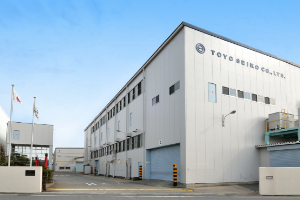
Head Office & Plant
  • 3-195-1 Umaganji, Yatomi-city , Aichi
    490-1412 , Japan
  • TEL:+81-567-52-3451
  • FAX:+81-567-52-3457
Established
  • February 15,1975
Capital
  • 25 million yen
Employees
  • 60 (March 2011)
Yearly turnover
  • 3,145 million yen (March 2011)
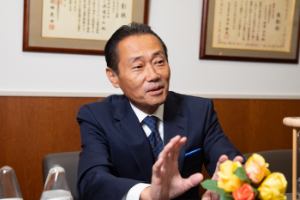
C.E.O.
  • Yoshihiro Watanabe
Office and Plant area
  • 6,020sq.m
Toyo Seiko
Thailand Plant
  • TOYO SEIKO (THAILAND) CO.,LTD
  • 802 Moo4, Bangpoo Industrial Estate, Soi 14,
    Sukhumvit Road, Praeksa,
    Muang, Samutprakarn 10280
    Thailand
    TEL:+66-2-324-0046
    FAX:+66-2-324-0047
    * 37km far from the center of Bangkok.
    20km far from Suvarnabhumi International Airport.
Production / Delivery start
  • November 2011
Capital
  • 72,000,000 Baht (about 200 million JPY)
Employees
  • 15 (Oct 2011 schedule)
Shareholders
  • TOYO SEIKO CO.,LTD.(60%),
  • Others(40%)
Managing Director
  • Hiroyuki Watanabe
Office and Plant area
  • 4,676sq.m (2.92Rai)
Toyo Seiko Thailand

Characteristics of Toyo Seiko

Consistent Production from Material to Product
We can always correspond to customer's requirement such as hardness and sizes.
Realization of manufacturing super hard shot (HV800 or above)
High hardness RCW is most suitable for hard shot peening to obtain high compressive residual stress. Toyo Seiko is the only company in the world to manufacture such hard shot media as hard as HV850.
25years of shot peening reserch collaborated wiht an university.
We have an ability to select the most suitable peening condition for customers utilizing PSPC X-ray stress analyzer.

Toyo Seiko Proceedings Library

  • Title: Effect Of Ultra Shot Peening On Casting Shape Memory Alloy
  • Author: Y Watanabe, K Hattori, M Handa, Y Yoshimi, T Inaba
  • Source: Conf Proc: ICSP-10 Tokyo, Japan 2008
  • Publication year 2008
  • Abstract:
    In order to overcome difficulties that have hindered precision casting of shape memory alloys, we made a ingots created with Self Propagating High Temperature Synthetic Method (SHS) which eventually led us to the success of precision casting utilizing lost wax process. Also we have succeeded in creating functional products that are treated with the ultrasonic shot peening process, improving the resiliency against deformation and fatigue strength. Although the common casting products are created using many different kinds of metals and alloys, casting products utilizing shape memory alloys have not been widely adopted due to a lack of successfully produced products. The reasons for this are that there was much difficulty in developing equal property structures that does not allow gravity segregation of Ni-Ti. Also its essential characteristics (being the shape memory and super elasticity), the makeup of component had to overcome the structural weaknesses in order to withstand from possible deformation.
  • Title: Effect of Ultra Shot Peening on Contact Surface Strength
  • Author: Watanabe, Hattori, Handa, Yoshida, Taki, Duchazeau
  • Source: Conf Proc: ICSP-9 (pg 179-184)
  • Publication year 2005
  • Abstract:
    For carburized gear, shot peening treatment is widely recognized for improvement of bending fatigue strength. However the effect of shot peening on tooth surface strength gears have not been clarified due to complicated mechanism. On the other hand, recently, Ultrasonic Shot Peening (USP) technology was developed by SONATS, France. The main characteristics of USP could be the smooth surface after operating compared to the conventional shot peening (CSP). In this study, roller fatigue test using a disk machine with rolling and sliding was carried out. As a result, surface strength of roller is deteriorated by shot peening treatment. But at the comparison between CSP and USP, the strength of USP would be remarkably higher than CSP.
  • Title: Searching for the Most Suitable Condition and the Suggestion of Each Application in Ultrasonic Shot Peening
  • Author: Hattori, Watanabe, Handa, Duchazeaubeneix
  • Source: Conf Proc: ICSP-8 Sept. 16-20, 2002 Garmisch-Partenkirchen, Germany
  • Publication year 2002
  • Abstract:
    Ultrasonic shot peening, named Stressonic, developed by SONATS, is being popularized among aeronautic industries for production parts and maintenance application because of its compact equipment that allows treatment partially and it can be integrated into production line. However, Stressonic has a big difference in processing method compared to that of classical shot peening. Therefore, the peening management, which influences the peening effect, needs to be renewed. In this report, treatment conditions as amplitude, shot media (material, diameter), injecting distance, are set as Stressonic management items. Then the most suitable Stressonic condition is experimented by intensity and residual stress distribution obtained from the management above. Stressonic application is also studied using parts, such as gears and springs, and confirmed its quality after Stressonic process. As a result of study and experiment, Stressonic application has an outstanding peening effect.
  • Title: An Effect of Peening on Fretting Fatigue
  • Author: Y Watanabe, N Hasegawa, H Endo, E Marui, Y Aoki
  • Source: Conf Proc: ICSP-7 (pg 127-134)
  • Publication year 1999
  • Abstract:
    A study has been made on the effect of shot peening on fretting fatigue, a complex deterioration phenomenon caused by the small amplitude relative motion of two metallic surfaces. To investigate this effect, two types peened specimens, having different surface roughness, and peened - annealed specimens were prepared. It was confirmed that shot peening improved fretting fatigue, and fretting fatigue strength increases with increasing roughness.
  • Title: Simulation of Residual Stress Distribution on Shot Peening
  • Author: Y. Watanabe, N. Hasegawa
  • Source: Conf Proc: ICSP-6, (p.530-535)
  • Publication year 1996
  • Abstract:
    The present research aims at obtaining a theoretical solution on basis of actural measurements of residual stress by shot peening. Firstly, it was conducted that residual stress on two different strength of plate specimens have been shot peened are measured by X-ray difractometer and the effect of a few type of shot peening conditions on profiles are confirmed. The equation to simulate profiles was obtained by the superpostition method of simple three stress, based on the equation that Y.F.Al-Obaid suggested. It was confirmed that the predicted stress profile shows good correspondence with experimental value in case of every shot peening conditions in this study.
  • Title: Effect of Shot Peening on Fatigue Strength of Carbon Steel at Elevated Temperature
  • Author: N. Hasegawa, Y. Watanabe, Y. Kato
  • Source: Conf Proc: ICSP-5, (p.134-139)
  • Publication year 1993
  • Abstract:
    A study has been made on the effect of shot peening on fatigue strength at elevated temperature on 0.50% carbon steel. By means of bending rotating testing over the temperature range from 20 deg.C to 450 deg.C, it was confirmed that shot peening increase the fatigue strength of specimens at room temperature due to work hardening and compressive residual stress at surface layer. And fatigue strength of shot peened specimens decrease with increasing testing temperature due to the reduction of the magnitude of residual stress. In comparison to annealed specimens, however, it was observed that the bendfit of shot peening is appeared up to 400 deg.C by work hardening.
  • Title: The Influence Of Broken Shots On Peening Effect Of Hard Shot Peening
  • Author: Watanabe, Hasegawa, Namiki, Natano
  • Source: Conf Proc: ICSP-4, (p. 63-72)
  • Publication year 1990
  • Abstract:
    Hard shot peening characterized by its larger shot injecting energy with arc height higher than 0.7 mmA is becoming popular as one of the methods to enhance the fatigue durability especially for case hardened components. During this process many shots are broken compared to conventional peening process. In this study, to clarify the influence of broken shots on fatigue properties, two types shots having two different hardness respectively are prepared. Ervine tests reveals that one of them has many broken particles and another has a little. Using these two types shots specimens were hardly peened and fatigue tests are carried out to obtain S-N curve and Weibull charts. The specimens peened with shots containing many broken shots show wider distribution of fatigue life than the ones peened with shots containing of a little. It is concluded that broken shots degrade the stability of peening effect in hard shot peening. Descriptors: Hard shot peening; Carburized steel; Residual stress; Retained austenite; Fatigue test; S-N curve; Weibull chart